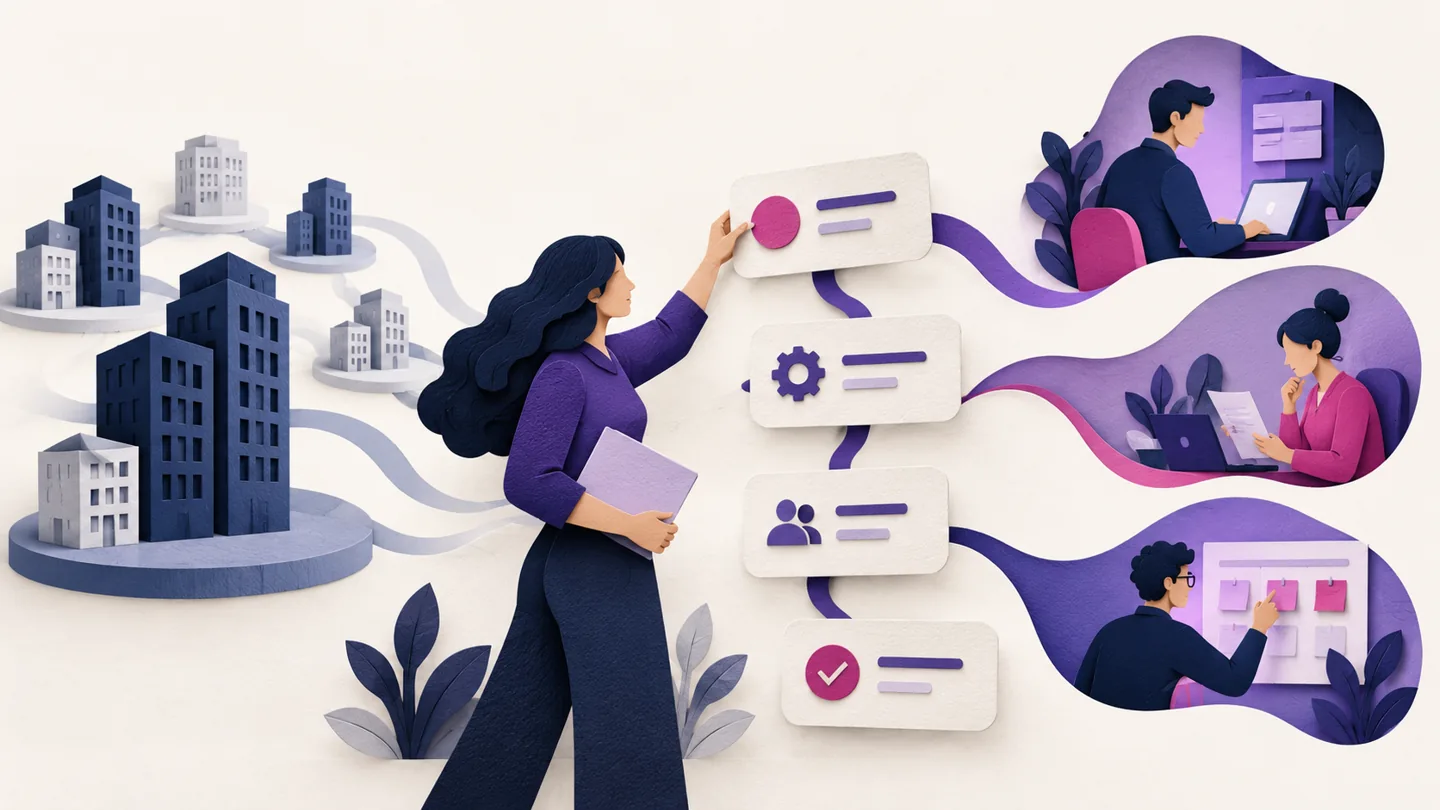
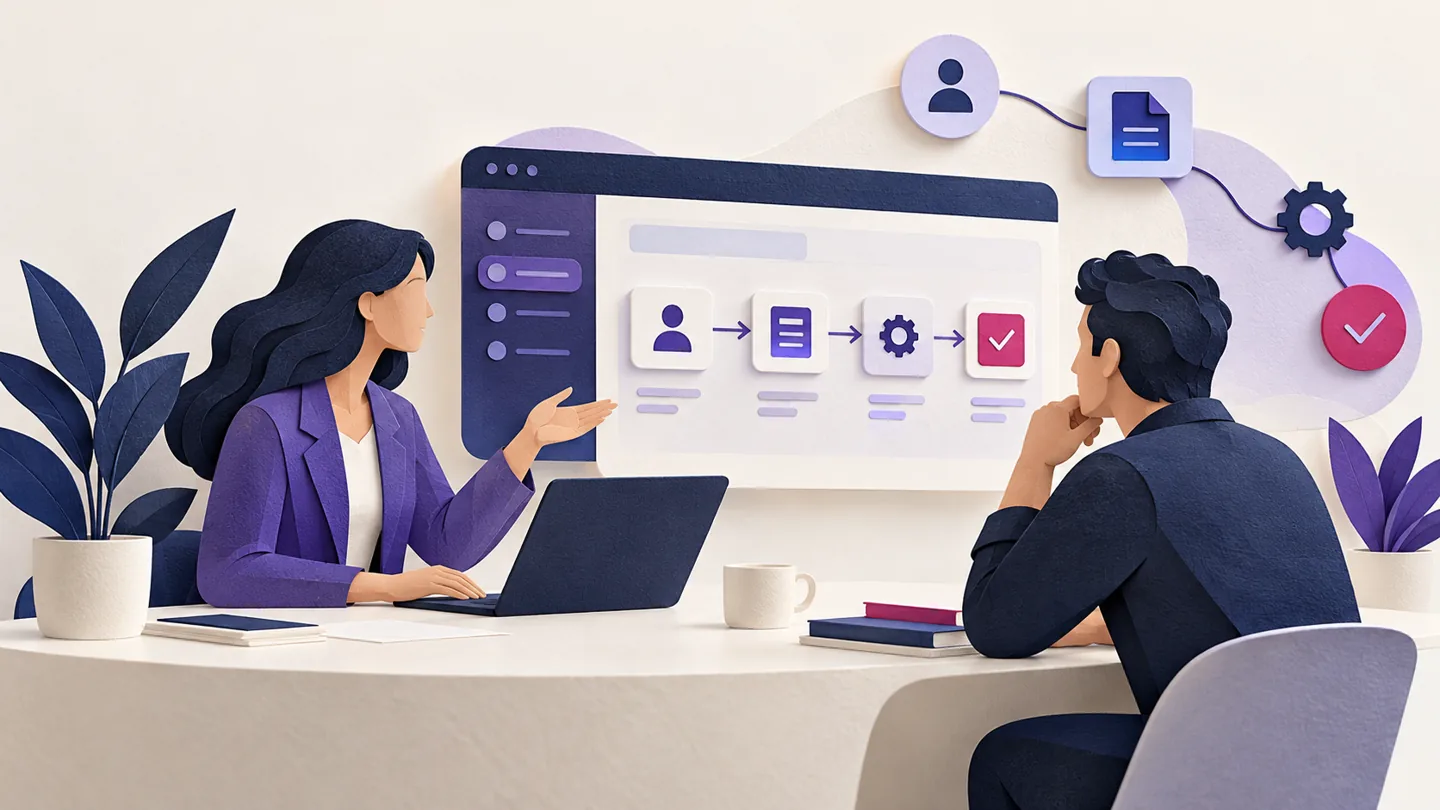
“Would you like a demo?” asks a new prospect to commit time before they understand what they will learn. A useful demo invitation explains the business situation, the workflow being shown and who the session is for. It should help someone assess relevance without promising a transformation you have not established. The same principle should continue into the meeting: show a clear use case, invite questions and agree a proportionate next step.
Lead with the question the buyer needs answered
Identify the decision your demo can support. A buyer may want to know whether a process can fit their approval structure, whether a handover is visible to another team or whether an integration is supported. Use that question to frame the invitation. A broad claim about saving time is less useful than explaining which task the session examines and what the prospect can compare with their current approach.
Be explicit about the use case
Describe one realistic workflow from start to finish. Say what is included in the demonstration and avoid implying that a generic environment reflects the prospect’s actual setup. If the product needs configuration or additional services to support a capability, explain that at the appropriate point. Clear boundaries help a buyer distinguish a standard feature, a possible integration and work that still needs to be scoped.
Ask for enough context to prepare
Once someone is interested, ask how the workflow is handled today and what prompted the conversation. A small amount of context can make a demonstration more useful. Avoid asking for a full procurement questionnaire before there is a clear reason to proceed. If a technical stakeholder is necessary, explain the purpose of their involvement rather than making attendance a barrier to an initial conversation.
Use a modest, truthful invitation
Illustrative wording: “We help service teams track enquiry handovers between locations. If that is a process you are reviewing, would a short walkthrough of the routing and ownership workflow be useful?” Adapt the situation to your actual product and audience. Do not add a fabricated claim about competitors or savings. The invitation should make a relevant conversation easier, not manufacture urgency where no priority exists.
Finish the demo with an agreed evaluation step
A meeting is not automatically a qualified opportunity. Summarise the use case, the requirements that remain unclear and the people involved in a decision. The next step might be a technical review, a scoped trial or a pause while the prospect considers priorities. Record the outcome and owner. This feedback also helps improve the campaign: it shows whether your invitation is attracting people who can realistically evaluate the product.
Give the demonstration a clear beginning and end
Plan the session around the buyer’s question. Start with the situation being considered, show the relevant workflow and finish by checking what the prospect still needs to understand. Avoid opening every demonstration with a long company presentation. Background can be useful, but it should not displace the task the buyer agreed to discuss. A clear agenda also makes it easier to respect the time available.
Decide which parts of the product should remain outside the initial demonstration. Showing unrelated features can make the platform appear broader while leaving the original question unanswered. Keep a route for questions that require a specialist or a different session. If the prospect asks about a capability that has not been verified, record it for follow-up instead of improvising a confident answer. A useful demonstration establishes accurate understanding, including the product’s boundaries.
Prepare sample data that explains the work
Use a demonstration environment that makes the workflow understandable without exposing real customer information. The sample should show a realistic starting point, a meaningful action and a clear result. Label invented records as demonstration data where needed. Avoid arranging the example so neatly that it hides the decisions a user would face in practice. A buyer should be able to ask how exceptions, missing information or shared ownership would be handled.
Test the session before inviting prospects. Check permissions, browser access and the sequence of screens required to show the workflow. Keep a clear explanation available if a feature cannot be demonstrated live. Technical preparation is part of meeting preparation, not a reason to promise a flawless outcome. The aim is to reduce avoidable friction so the discussion can focus on suitability rather than troubleshooting the presentation.
Translate interest into evaluation questions
If a prospect says the product looks useful, explore what they would need to establish before taking it further. They might want to understand how their team would use it, what data needs to move or how implementation responsibilities would be shared. Do not assume that positive feedback means a purchase decision is imminent. Capture the questions in language the buyer recognises and agree who can help answer them.
A suitable next step could be a scoped technical discussion or a demonstration for another role. It could also be a pause while the prospect confirms an internal priority. Keep that distinction clear in the opportunity record. The quality of the evaluation matters more than the number of meetings added after the first demo. A sequence of calls without a defined decision can create activity without meaningful progress.
Align the invitation, confirmation and follow-up
Read the first email, the calendar description and the follow-up together. They should describe the same use case and a consistent level of commitment. If the invitation offers a short workflow walkthrough, the confirmation should not suddenly describe a procurement workshop. If the prospect asked about one process, the follow-up should explain what was learned about that process before introducing a broader commercial discussion.
Make the handover explicit when a different colleague runs the session. Share the original message, the prospect’s response and the question the demo is intended to answer. Review completed meetings for expectation mismatches. Repeated confusion is a reason to improve the journey, not to blame prospects for misunderstanding it. A coherent invitation helps the right person decide to attend and helps the seller deliver the conversation that was promised.
Your practical checklist
- Name the question the demo will answer.
- Show one workflow before the whole platform.
- Clarify configuration and integration boundaries.
- Record an agreed evaluation step after the meeting.
Need help applying this to your outreach?
Explore our managed cold email service, or talk through your audience, offer and current setup with our team.
Published by Galaxy LeadsPro. Sample messages and scenarios are illustrative; adapt them to your service and use only accurate, verified information.